
Comprehensive Overview of Transformer Factory Tests
Upon completion of manufacturing, transformers must undergo factory tests to verify their electrical performance, insulation integrity, and build quality, ensuring compliance with relevant standards and technical specifications. Test items vary depending on the transformer’s type, capacity, and voltage rating. Common tests include the following:
1. Visual and Assembly Inspection
This involves checking the nameplate parameters, terminals, bushings, tap changers, grounding devices, and fasteners. For oil-immersed transformers, inspections also cover oil levels, valves, and seals to check for leaks.
2. Winding DC Resistance Test
This test measures the DC resistance of each phase winding and compares the values across the three phases.
It helps detect issues such as poor winding welds, abnormal lead connections, faulty tap changer contacts, and phase resistance imbalances.
3. Voltage Ratio, Polarity, and Vector Group Test
The voltage ratio test verifies whether the actual voltage ratio between high- and low-voltage windings meets design specifications.
Polarity and vector group tests confirm the correctness of winding connections and phase relationships, identifying issues such as incorrect turn counts, wiring errors, or abnormal tap positions.
4. Insulation Resistance Test
This measures insulation resistance between windings (high-to-low voltage) and between windings and the ground. It assesses the insulation for moisture, contamination, aging, or potential grounding faults.
Depending on requirements, the absorption ratio or polarization index may also be measured for some transformers.
5. No-Load Test
The no-load test measures no-load loss and no-load current, reflecting the material properties and assembly quality of the transformer core.
Abnormalities in no-load loss or current may indicate issues with core assembly, silicon steel sheet insulation, core grounding, or the test voltage waveform.
6. Load Test
Also known as the short-circuit test, this test measures load loss, short-circuit impedance, and impedance voltage.
It evaluates winding conductor losses, connection quality, and whether the winding structure meets design specifications. Since load loss is temperature-dependent, test results typically require temperature correction. 7. Applied Power-Frequency Withstand Voltage Test
This test verifies the main insulation strength—both between windings and ground and between different windings—by applying a specified high power-frequency voltage to the transformer.
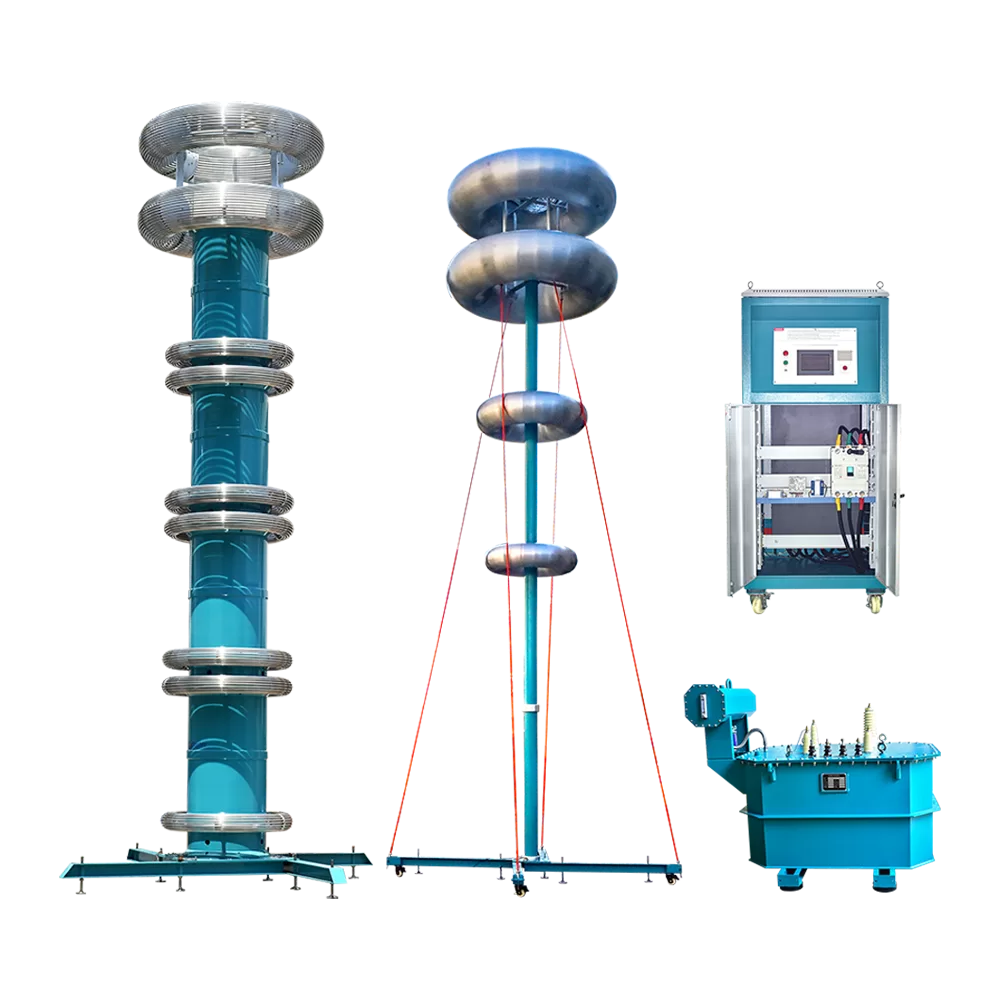
As a high-voltage test, it requires the implementation of overcurrent protection, emergency stop mechanisms, safety barriers, and high-voltage interlocks during the procedure.
8. Induced Withstand Voltage Test
The induced withstand voltage test is primarily used to check insulation between turns, layers, sections, and phases of the windings.
Compared to the applied power-frequency withstand test, this test focuses more on internal winding insulation and typically requires a variable-frequency power supply.
9. Insulating Oil and Sealing Inspection
For oil-immersed transformers, additional inspections are usually required for the insulating oil’s breakdown voltage, the condition of oil samples, and the sealing integrity of the tank.
These checks help determine if the insulating oil has absorbed moisture or been contaminated by impurities, while also identifying potential leaks in the tank, radiators, valves, or welded joints.
10. Other Test Items
Depending on the product type and technical specifications, some transformers may also undergo:
① Partial discharge test;
② Noise test;
③ Temperature rise test;
④ Tap changer test;
⑤ Dielectric loss test;
⑥ Lightning impulse test;
⑦ Functional checks of cooling fans and temperature control systems.
These tests are not necessarily applicable to every unit; requirements are usually determined based on product standards, customer agreements, or the specific category of testing.
What does a factory test report include?
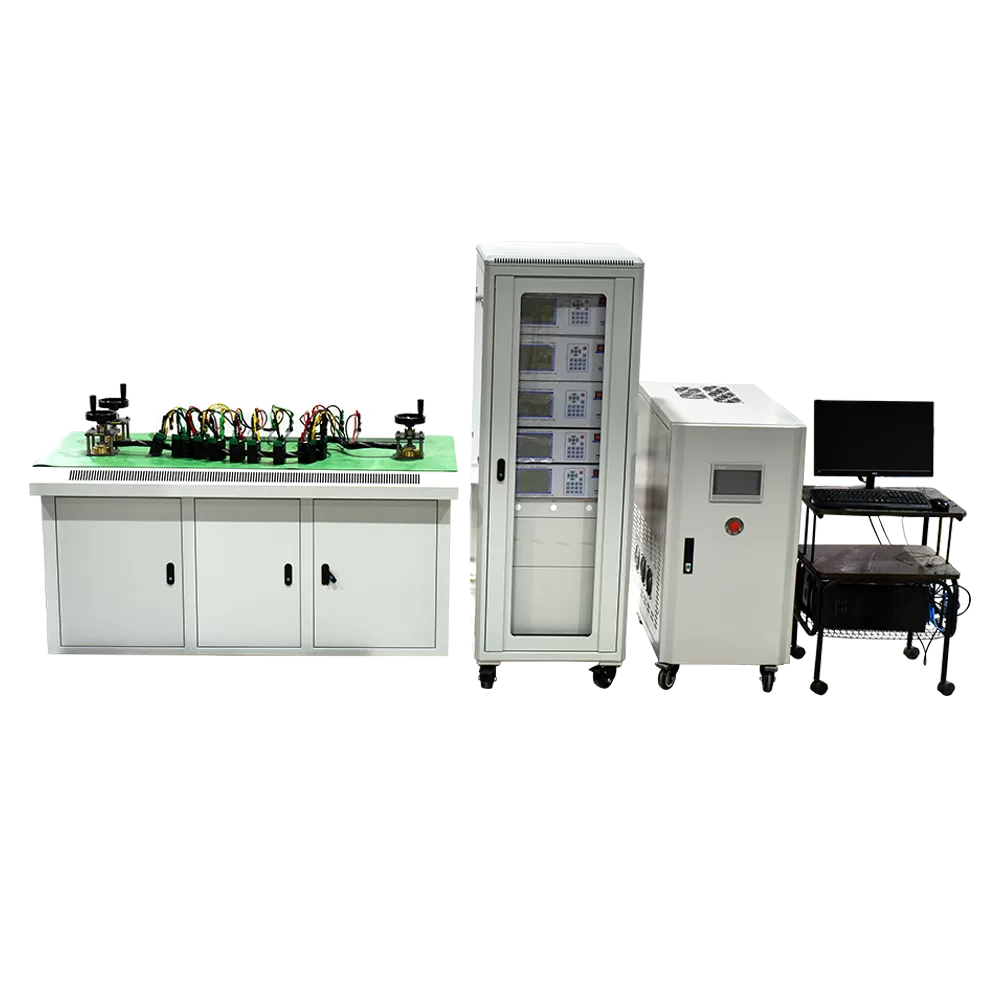
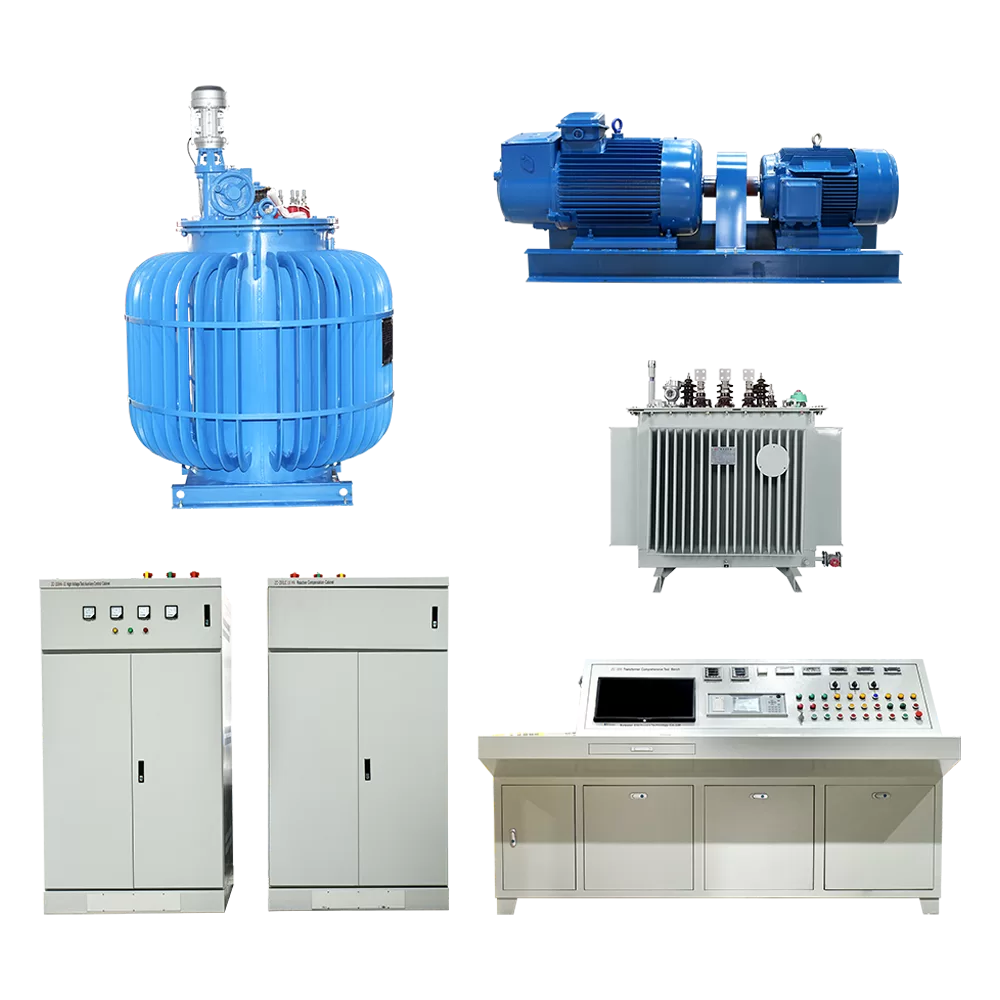
Upon completion of testing, a factory test report is typically generated. It primarily includes the product model, rated parameters, test data, temperature-corrected results, permissible limits, and pass/fail determinations. Using an integrated transformer test bench enables automated data acquisition, calculation, result assessment, and report generation, thereby reducing manual recording errors and improving testing efficiency.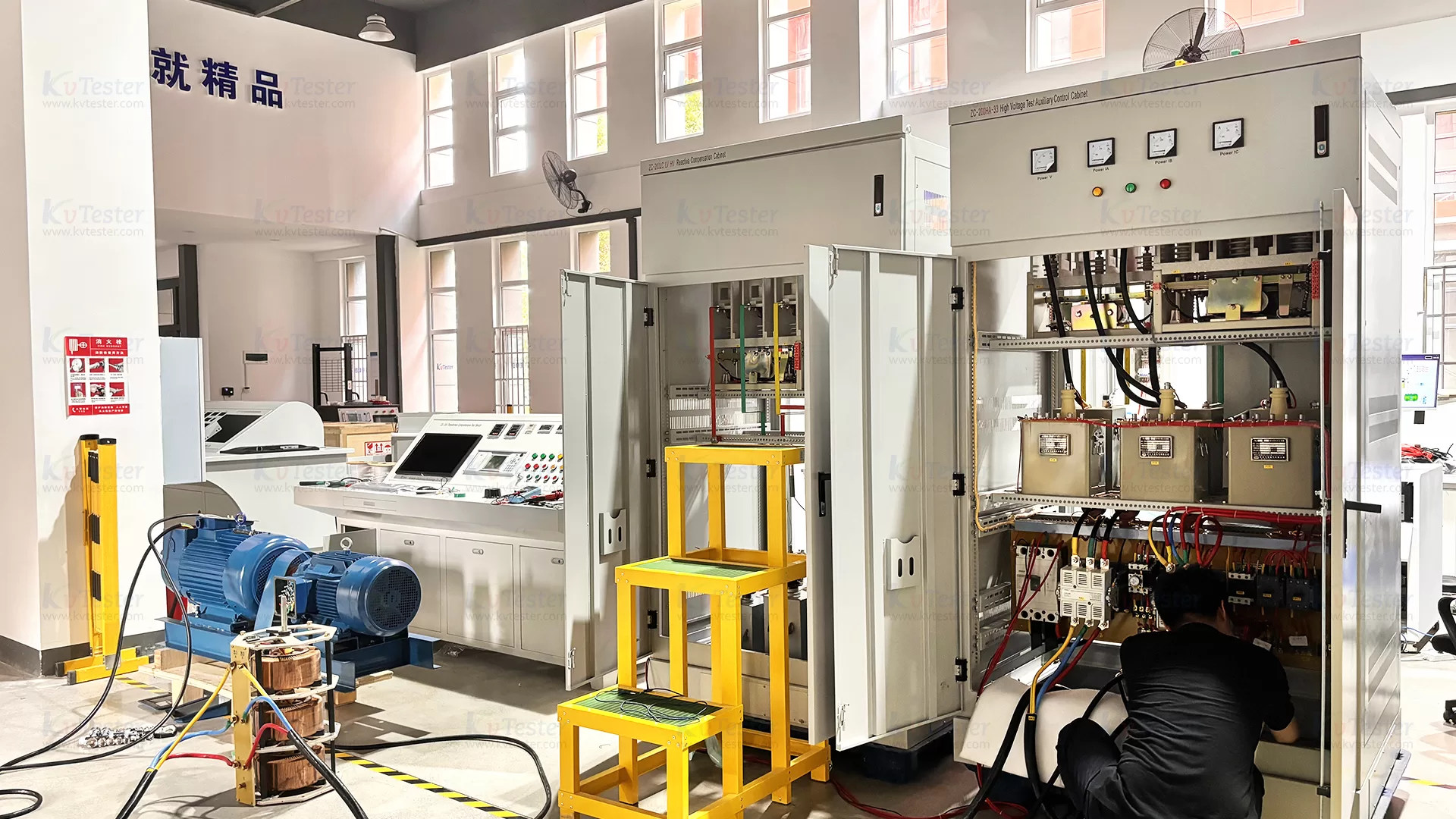
Conclusion
Standard factory tests for transformers primarily include DC resistance, turns ratio, vector group, insulation resistance, no-load loss, load loss, short-circuit impedance, and withstand voltage tests. These tests allow for a systematic assessment of the quality of the transformer’s windings, core, insulation, and wiring, providing a basis for ensuring the product’s safe operation.
Related Products
Lasted News
-
 2026-07-20What tests can a transformer comprehensive test bench perform?
 -
 2026-07-17How do you interpret the key parameters of a relay protection tester? A detailed look at current, voltage, phase, and frequency accuracy.
 -
 2026-07-17How to Choose a Relay Protection Tester? Differences Between Three-Phase, Six-Phase, and Digital-Analog Integrated Models
 -
 2026-07-17What is a relay protection tester? An introduction to its purpose, functions, and application scenarios.
 -
 2026-07-17Transformer Oil Tester: Buying Guide for Transformer Oil Analysis