
Can VLF (Very Low Frequency) withstand voltage testing be used for 10kV and 35kV cables?
Can VLF (Very Low Frequency) withstand voltage testing be used for 10kV and 35kV cables?
Yes. VLF withstand voltage testing can be applied to 10kV and 35kV power cables, provided that the test plan, equipment voltage rating, load-bearing capacity, and on-site operational procedures comply with relevant standards.
VLF withstand voltage testing is commonly used for field testing shielded power cable systems. IEEE 400.2-2024 serves as the guide for field testing shielded power cable systems using VLF methods (frequencies below 1 Hz).
1. Why are 10kV and 35kV cables suitable for VLF testing?
Power cables inherently exhibit significant capacitive characteristics. The longer the cable, the higher its capacitance. During AC withstand voltage testing, the cable generates capacitive current.
Capacitive current is frequency-dependent: higher frequencies result in higher currents, while lower frequencies result in lower currents. Standard power frequency is 50 Hz, whereas VLF is typically 0.1 Hz. Lowering the test frequency significantly reduces capacitive current, thereby lowering the required capacity of the test equipment.
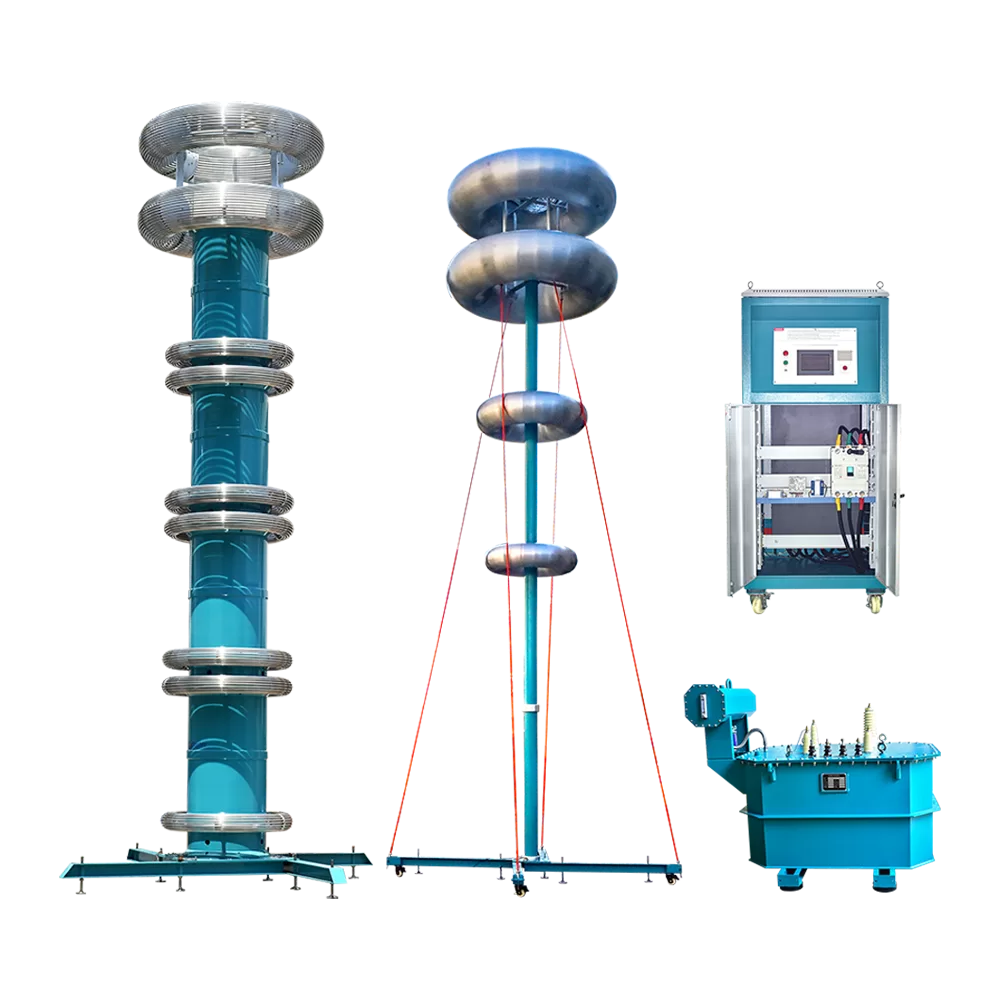
Therefore, for medium-voltage cables like 10kV and 35kV types—especially those with long installed lengths requiring high test capacity—VLF high-voltage generators are more portable and better suited for field use than traditional power-frequency withstand voltage equipment.
2. What should be considered for 10kV cables?
10kV cables are a common application for VLF withstand voltage testing. VLF high-voltage generators may be used for newly installed cables before commissioning, for preventive testing of operational cables, and for re-testing after fault repairs.
When selecting equipment for 10kV cables, one must look beyond the “maximum output voltage” and consider the cable’s length, capacitance, and the equipment’s load-bearing capacity. For shorter cables, standard models usually suffice; for longer cables, capacitance must be calculated to avoid issues such as the inability to ramp up voltage, overcurrent protection trips, or failure to complete the test.
3. Can it be used for 35kV cables? Very Low Frequency (VLF) withstand voltage testing can also be applied to 35kV cables, though the equipment requirements are more stringent than for 10kV cables.
There are two reasons for this: first, the test voltage for 35kV cables is typically higher; second, 35kV cables often have larger cross-sectional areas and longer installation distances, resulting in higher capacitance. Consequently, the VLF high-voltage generator requires a higher output voltage and greater load-driving capability.
For long-distance 35kV cables, load capacitance is a critical factor during equipment selection. If necessary, a lower output frequency—such as 0.05Hz or 0.02Hz—can be selected to enhance the equipment’s load-driving capacity. Alternatively, if voltage levels, capacitance, or project requirements exceed these limits, other AC withstand voltage methods, such as variable-frequency series resonance, may be considered.
4. What are the key factors for equipment selection?
The suitability of VLF testing for 10kV or 35kV cables depends not only on the cable’s voltage rating but also on whether the equipment matches the specific on-site testing conditions.
When selecting equipment, focus on the following aspects:
Whether the output voltage rating meets testing requirements;
Whether the equipment’s load capacitance capacity is sufficient for the cable length;
Whether the output frequency is adjustable (e.g., 0.1Hz, 0.05Hz, 0.02Hz);
Whether it includes protection functions against overvoltage, overcurrent, flashover, and breakdown;
Whether the high-voltage unit, control box, connecting cables, and discharge device are suitable for on-site use;
Whether it supports data recording, report printing, and the saving of test results.
my country’s standard DL/T 849.4—2024, *General Technical Specifications for Specialized Testing Instruments for Power Equipment – Part 4: Very Low Frequency (VLF) High-Voltage Generators*, outlines the technical requirements, test methods, inspection rules, and specifications for marking, packaging, transport, and storage applicable to the manufacture and inspection of VLF high-voltage generators.
5. What precautions should be taken during use?
VLF withstand voltage testing is a high-voltage test; therefore, on-site operations must strictly adhere to standard procedures.
Before testing, confirm that the cable has been de-energized, verified as dead (voltage-checked), and fully discharged, and that it is reliably isolated from other operating equipment. The cable shielding, equipment enclosure, and grounding terminals must be reliably grounded. During the test, the voltage should be raised slowly in accordance with regulations while monitoring voltage, current, and equipment alarm status. If abnormal noise, flashover, overcurrent protection activation, or abnormal voltage fluctuations occur, the test must be stopped immediately for inspection.
Do not disconnect the test leads immediately after the test concludes. Cables are capacitive devices that may retain a residual charge; therefore, they must be fully discharged and grounded before any disconnection or phase-switching operations are performed.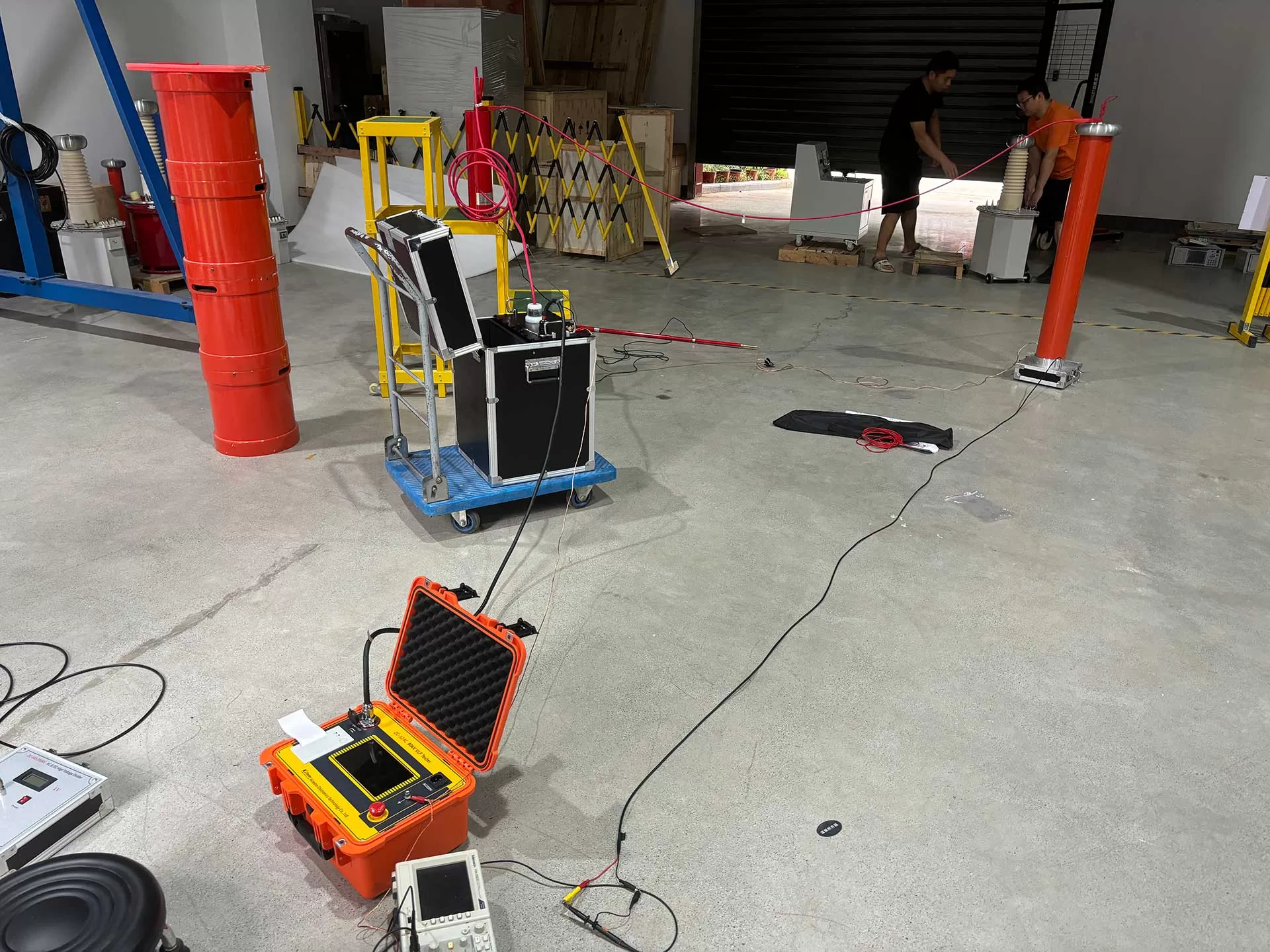
6. Summary
Very Low Frequency (VLF) withstand voltage testing is applicable to both 10kV and 35kV cables. While it is more commonly used for 10kV cables, it is also suitable for 35kV cables, albeit with stricter requirements regarding equipment voltage ratings and load-carrying capacity.
In short:
10kV cables: Generally suitable for VLF high-voltage generators; widely used in the field.
35kV cables: VLF testing is applicable, but careful calculation of voltage ratings, cable length, and load capacitance is essential.
Extra-long cables or high-capacitance testing: Requires consideration of site conditions, potentially involving lower frequency outputs or alternative AC withstand voltage methods.
Therefore, determining the suitability of VLF testing for 10kV and 35kV cables requires a comprehensive assessment—considering not just the voltage rating, but also cable length, capacitance, test voltage, equipment capacity, and relevant testing standards.
Related Products
Latest News
-
 2026-09-302026 Top 3 Chinese Insulation Resistance Transformer Testing Equipment Manufacturers
 -
 2026-09-30Industrial CT Tester: How Is It Used for Current Transformer Factory Testing?
 -
 2026-09-30How Can a CT PT Analyzer Improve CT and PT Quality Testing in the Laboratory?
 -
 2026-09-30How to Perform Current Transformer Testing Step by Step?
 -
 2026-09-30How to Perform CT Analyzer Testing and Evaluate the Test Results?