
Home » News » Company News
Anti-interference High Voltage Insulation Tester Maintain Measurement Accuracy
High voltage insulation testing is often performed in environments where electrical equipment, energized circuits, and nearby power lines can introduce external interference. Under these conditions, even a properly connected insulation tester may produce unstable readings, making it difficult to evaluate the actual insulation condition of the equipment.
How can an anti-interference high voltage insulation tester reduce the impact of these disturbances? Understanding interference sources, measurement stability, and the tester’s technical capabilities can help you select suitable equipment for reliable insulation resistance testing.
Why Is Interference a Challenge in High Voltage Insulation Testing?
High voltage insulation testing measures the resistance between conductive parts and insulation materials to evaluate their electrical insulation condition. However, measurements can become more challenging when testing takes place in electrically noisy environments.
Common Sources of Interference
External interference may come from several sources during field testing:
- Nearby energized equipment: Transformers, switchgear, and other operating electrical equipment can generate electromagnetic fields that affect measurement conditions.
- High-voltage power lines: Testing near energized conductors may expose test circuits and connecting cables to electromagnetic interference.
- Complex substation environments: Multiple operating circuits and electrical installations can create changing interference conditions.
- Improper test connections: Poor cable connections, unsuitable cable routing, or inadequate grounding may introduce additional measurement disturbances.
The actual interference level depends on the testing environment, equipment configuration, and connection conditions.
How Can Interference Affect Measurement Results?
Insulation resistance measurements often involve very small currents, particularly when testing equipment with high insulation resistance. External interference can therefore become a significant factor.
Depending on the test conditions, interference may contribute to:
- Fluctuating measurement readings
- Differences between repeated measurements
- Unstable displayed values
- Greater difficulty identifying abnormal insulation conditions
These problems do not necessarily indicate insulation deterioration. Before making a maintenance decision, technicians should consider whether the measurement environment or testing connections have affected the results.
How Does an Anti-interference Insulation Tester Reduce Measurement Errors?
An anti-interference insulation tester is designed to maintain more reliable measurements when external electrical disturbances are present. Its performance depends on how well the instrument handles interference under specified testing conditions.
Interference Resistance and Measurement Accuracy
A useful way to evaluate interference resistance is to examine whether the manufacturer provides a defined interference current level and explains how the instrument performs under that condition.
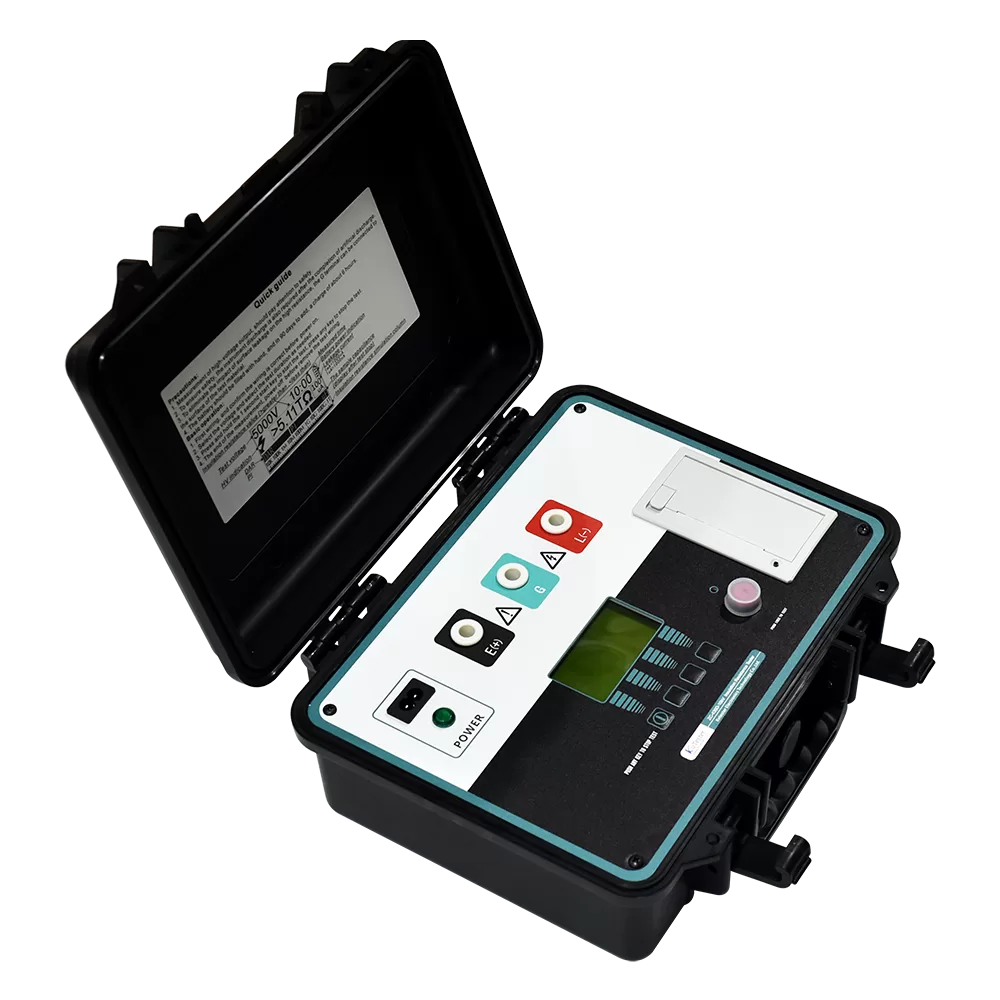
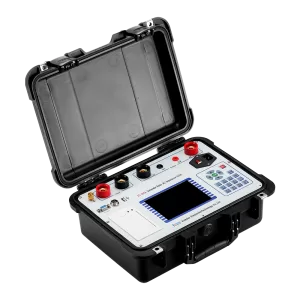
For example, our ZC-430D-15KV High Voltage Insulation Resistance Tester is designed for high-voltage insulation measurements in demanding electrical environments. Its product specifications describe anti-jamming performance under interference current conditions reaching 2 mA while maintaining testing accuracy.
This provides a practical reference when evaluating equipment for field applications. However, buyers should also check the applicable test voltage, resistance range, and measurement conditions rather than treating an interference current figure as a universal accuracy guarantee.
How Does Digital Filtering Help?
Digital filtering is another feature used to reduce the influence of unwanted signals on measurement results.
During insulation testing, the instrument collects and processes electrical signals to calculate and display insulation resistance. External disturbances may affect these signals and cause displayed values to fluctuate.
A digital filtering function helps process the measurement signal and reduce the effect of certain disturbances on the displayed reading. This can make measurements easier to observe and interpret in environments with electrical interference.
It is important to distinguish between reducing interference effects and eliminating all interference. Actual measurement performance still depends on the surrounding electrical environment, test connections, and instrument operating conditions.
What Makes a High Voltage Insulation Tester Suitable for Field Applications?
Anti-interference performance is important, but it is only one part of a suitable insulation testing solution. Technicians also need to consider test voltage, resistance measurement range, additional functions, and equipment portability.
High Test Voltage for Insulation Assessment
The required test voltage depends on the rated voltage, insulation structure, and applicable testing procedures of the equipment being evaluated.
The ZC-430D-15KV supports a maximum test voltage of 15 kV, making it suitable for high-voltage insulation resistance testing applications that require this voltage level.
When selecting an instrument, confirm that its available test voltage matches the requirements of the equipment under test. Applying an unsuitable test voltage may produce misleading assessment results or place unnecessary stress on the insulation system.
Wide Insulation Resistance Measurement Range
High-quality insulation materials can exhibit very high resistance values. A tester therefore needs an appropriate measurement range to evaluate different insulation conditions.
The ZC-430D-15KV provides an insulation resistance measurement range of up to 15 TΩ at 15 kV. This capability supports measurements involving high-resistance insulation systems.
When comparing instruments, check the resistance range at the relevant test voltage. The maximum measurement range alone does not describe accuracy across the entire range.
Additional Functions for Insulation Condition Assessment
Besides insulation resistance, other measurement functions can help technicians evaluate insulation performance from different perspectives.
The ZC-430D-15KV supports:
- Polarization Index (PI): Compares insulation resistance readings taken at different time intervals to help assess insulation condition.
- Dielectric Absorption Ratio (DAR): Uses resistance readings at specified time intervals as an additional insulation assessment indicator.
- Leakage Current Measurement: Measures current flowing through the insulation during testing.
- Capacitance Measurement: Measures the capacitance of the connected test object.
These functions can provide more information during insulation assessment, although their interpretation should follow the applicable testing procedures and equipment requirements.
Portability for On-Site Testing
Field technicians may need to move between substations, transformer installations, and other testing locations. Equipment weight and power supply options can therefore affect daily work efficiency.
The ZC-430D-15KV weighs approximately 3.6 kg and supports both lithium-ion battery and AC power supply. Its compact design helps simplify transportation and supports testing tasks in different working locations.
What Should You Consider When Choosing an Anti-interference High Voltage Insulation Tester?
Choosing an insulation tester requires more than comparing maximum test voltage or measurement range. The instrument should match the electrical environment, testing procedures, and technical requirements of the equipment being evaluated.
Check the Specified Interference Resistance
Look for measurable interference performance rather than relying only on general descriptions such as high anti-interference capability.
Useful information to request includes:
- The specified interference current level
- Test conditions under which the interference specification applies
- Whether the instrument maintains its stated accuracy under those conditions
- Whether digital filtering or other interference-reduction functions are provided
A clearly defined specification makes it easier to compare different instruments and determine whether they suit the intended testing environment.
Match Test Voltage and Measurement Range to Your Application
The tester’s output voltage and resistance measurement range should correspond to the insulation requirements of the equipment under test.
Before purchasing, identify:
- The rated voltage of the equipment
- The required insulation test voltage
- The expected insulation resistance range
- The applicable testing standards and procedures
Do not select a tester based only on its maximum voltage. The instrument must also provide suitable measurement performance at the voltage and resistance levels used in your actual applications.
Evaluate Accuracy and Additional Measurement Functions
Measurement accuracy should be considered across the required test range and under the specified operating conditions.
If your testing work involves insulation condition assessment over time, functions such as PI and DAR may also be useful. Leakage current and capacitance measurements can provide additional information depending on the equipment and testing requirements.
Consider Portability and Power Supply
For field testing, equipment weight, battery operation, and available power supply options can affect convenience.
A portable instrument can reduce transportation demands, particularly when technicians need to carry testing equipment between multiple locations. Battery and AC power options also provide flexibility for different working conditions.
How Can You Improve Measurement Reliability During Insulation Testing?
Even when using an anti-interference insulation tester, correct testing procedures remain essential. Instrument performance alone cannot compensate for unsuitable connections or unsafe operating conditions.
Check Test Cables and Connections
Inspect test cables, connectors, and terminals before starting a measurement. Loose connections, damaged insulation, or unsuitable cable routing may affect measurement reliability.
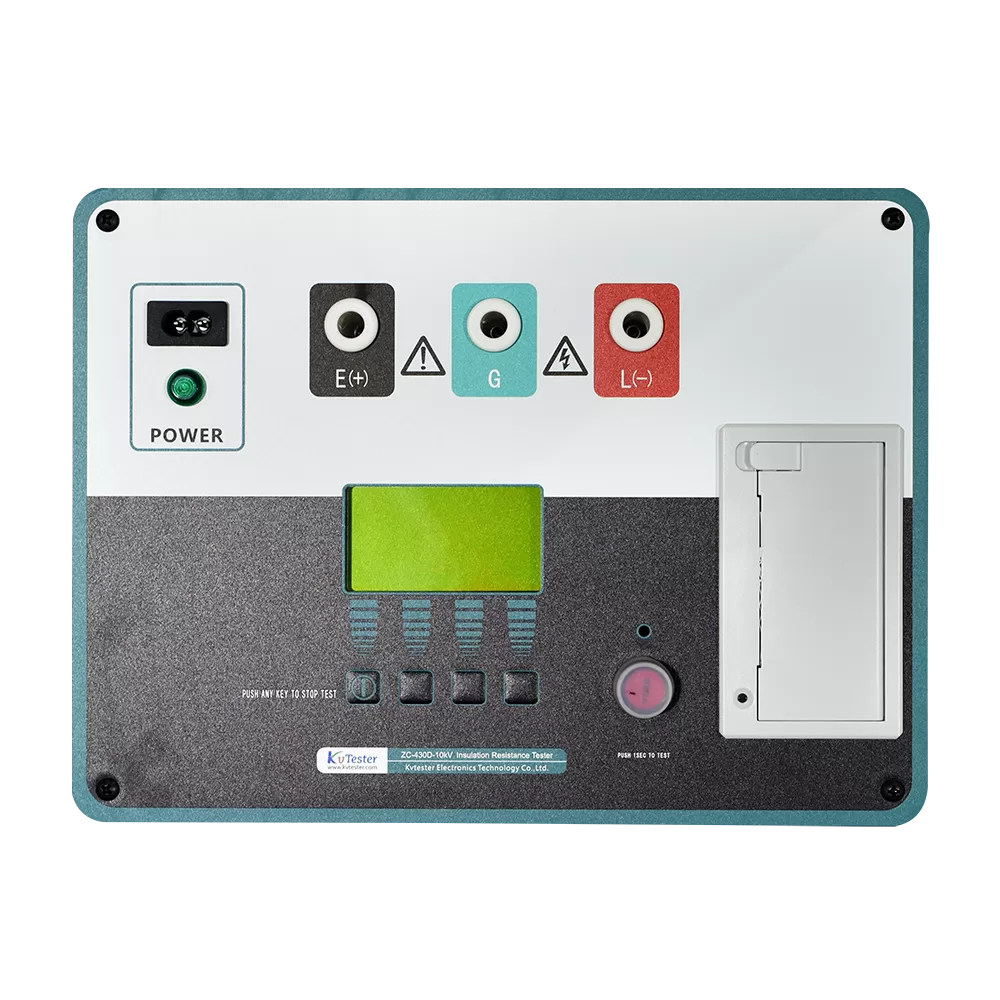
Use the correct terminals and connection method specified by the instrument manufacturer.
Keep Test Cables Away from Interference Sources
Where practical, avoid routing test cables close to energized conductors or other strong electromagnetic interference sources. Keep cable arrangements organized and minimize unnecessary cable length.
If the instrument provides a dedicated shielding terminal or interference-reduction connection, follow the manufacturer’s instructions for its use rather than assuming that every tester uses the same connection method.
Follow the Required Discharge Procedure
High-voltage insulation testing can leave residual electrical charge in the tested equipment. After completing a test, follow the instrument manufacturer’s discharge procedure and the applicable electrical safety requirements before disconnecting cables or touching the test object.
Never assume that the tested equipment is safe to handle immediately after the test voltage has been removed.
Repeat and Compare Unstable Measurements
If readings fluctuate unexpectedly, check the test connections and surrounding electrical conditions before drawing conclusions about insulation quality.
Repeat measurements under consistent conditions and compare the results with previous records where available. Significant differences should be investigated rather than automatically attributed to insulation deterioration.
Conclusion
An anti-interference high voltage insulation tester helps address one of the main challenges of field insulation testing: maintaining reliable measurement results in electrically noisy environments.
When evaluating this type of instrument, pay attention to specified interference resistance, digital filtering, measurement accuracy, test voltage, resistance range, and practical field requirements. These factors should be considered together to determine whether the equipment matches your testing applications.
At Kvtester, we provide insulation resistance testing instruments for electrical testing and maintenance applications. Our ZC-430D-15KV combines a maximum test voltage of 15 kV, insulation resistance measurement up to 15 TΩ at 15 kV, digital filtering, and stated anti-jamming performance under interference current conditions reaching 2 mA.
Looking for an anti-interference high voltage insulation tester for your testing applications? Contact Kvtester to discuss your technical requirements and get suitable equipment recommendations.
Related Products
Latest News
-
 2026-11-26How Does a Lightweight PT Tester Improve On-Site Testing Efficiency?
-
 2026-11-20How to Use a PT Tester for Accurate Error Calibration
-
 2026-11-20Variable Inductance Resonant Test System: How It Works
-
 2026-11-20High Voltage PT Tester for Accurate Voltage Transformer Testing
-
 2026-11-19Generator Rotor AC Impedance Tester for Fault Detection