Common problems and solutions during the use of transformer winding deformation tester are as follows: 1. Common problems in the preparation stage before testing ① The device cannot be started or the display screen does not light up. A. Reasons: insufficient battery power, poor contact of the power cord, or blown fuse.
B. Solution: Check the battery level. If the device is being powered by a battery, charge or replace the battery in a timely manner. Check the integrity of the power cord and ensure that the plug is securely connected to the outlet. Open the device casing and check if the fuse is blown. If it is, replace it with a fuse of the same specification.
② Insufficient equipment warm-up time A. Reason: The equipment was not fully warmed up in a low-temperature environment, resulting in measurement errors.
B. Solution: During winter or when the temperature is low, turn on the device in advance and allow it to preheat for at least 15 minutes to ensure the internal temperature of the device is stable.
③ Insufficient discharge of transformer A. Reason: No discharge after DC resistance test, residual charge interferes with test signal.
B. Solution: Before testing, fully discharge the transformer windings using a discharge rod to ensure there is no residual charge.
2. Common problems in the testing operation phase: ① Abnormal test curve A. Causes: Electromagnetic interference. Loose wiring or poor contact. Severe deformation or fault in the winding.
B. Solution: Keep away from interference sources, use shielded cables, and strengthen equipment grounding. Recheck the wiring to ensure that it is secure and not loose. Combine other testing methods to comprehensively assess the condition of the winding.
② Poor repeatability of test data A. Reasons: Unstable wiring during testing, changes in contact resistance. Influence of environmental factors (such as temperature and humidity changes).
B. Solution: Recheck the wiring to ensure consistency and firmness for each test. Maintain a stable testing environment, and allow the transformer that has just been taken out of operation to fully cool down before measurement.
③ During the testing process, the device unexpectedly stopped or reset. A. Reason: The external electromagnetic interference was too severe. The system was running other software, causing a hardware interrupt conflict in the microcomputer system.
B. Solution: Eliminate interference sources, exit other software, and restart the host.
3. Common problems in the post-test data processing stage: ① Data cannot be stored or backed up. A. Reasons: Insufficient storage device space, incompatible data format.
B. Solution: Clear the storage device space in a timely manner to ensure sufficient capacity for storing data. Use the storage format supported by the device to facilitate subsequent analysis.
② Abnormal data analysis result A. Reason: The test data shows a significant deviation when compared to historical data or the standard curve. The software version is outdated, and there may be vulnerabilities or compatibility issues.
B. Solution: Re-check the test data to ensure its accuracy. Update the software to the latest version and fix known vulnerabilities.
4. Common problems in equipment maintenance and upkeep phase: ① Battery damage due to long-term equipment idleness. A. Reason: Over-discharge caused by long-term non-use of lithium batteries.
B. Solution: If the device is not to be used for an extended period, it is recommended to power it on and discharge the battery every two months, then fully charge it before storing.
② Stains or dust accumulation on the equipment surface A. Reason: Failure to clean the equipment regularly, affecting heat dissipation and operation.
B. Solution: Wipe the surface of the device regularly with a dry soft cloth, and avoid using chemical cleaning agents.
③ Damage or aging of test line A. Reason: The test line is damaged due to frequent bending and improper winding.
B. Solution: Avoid curling during wire laying, and store the wire in a straight and circular manner with a diameter of no less than 35 centimeters. Do not use other non-standard test wires as substitutes, as this may affect the accuracy of the test.
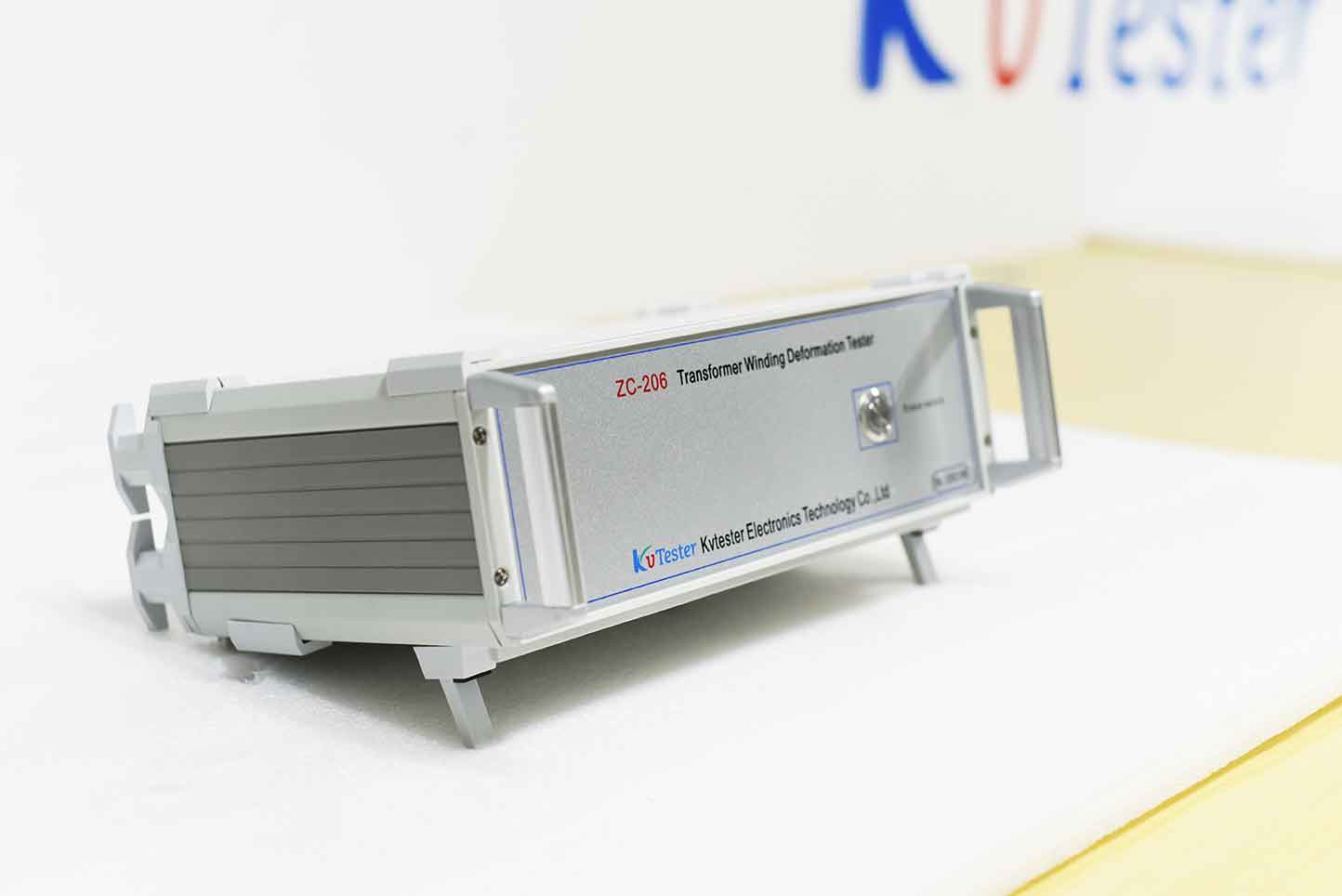
The ZC-206 transformer winding deformation tester quantifies the variation of the winding parameters in different frequency domains, determines the degree of deformation of the winding according to the trend of variation, range, range and frequency response, and then judges whether the transformer is seriously damaged or needs according to the test result. Overhaul. The device is compact and easy to operate.
Kvtester Electronics Technology Co.,Ltd. is a high-tech enterprise specializing in power testing, testing, research and development, production, and sales of testing equipment. It has been engaged in the electrical testing industry for many years, and its products are of high quality. We welcome customers to come and purchase. Service hotline: 0086-27-81778799, to learn more, visit the official website: www.kvtester.com