The selection of transformer ratio tester should comprehensively consider factors such as testing requirements, equipment performance, usage scenarios, and budget. The following are specific selection suggestions, covering core parameters, functional expansion, brand services, and cost-effectiveness
1. Clearly define testing requirements and determine core parameters
① Variable ratio range and accuracy
Scope coverage: Select the range according to the type of transformer. For example, distribution transformers need to cover a ratio of 1:1 to 200:1; The ultra-high voltage main transformer needs to support a ratio of 1:1 to 10000:1.
Accuracy level: Power system testing requires an error of ≤± 0.1% (high-precision models); General industrial testing can accept an accuracy of ± 0.5%, but it is necessary to ensure compliance with relevant standards.
② Wiring group support
Standard group: Priority should be given to models that support automatic recognition of common groups such as Yyn0, Dyn11, Yd1, etc., to avoid manual input errors.
Special group: If testing complex windings such as Z-type grounding transformers and Scott connections, it is necessary to confirm whether the instrument supports custom group comparison or manual input functions.
③ Tap changer testing capability
Automatic scanning: Select models that support preset tap total and level difference, which can automatically complete all gear tests and generate transformation curves to improve efficiency.
Differential range: Ensure that the instrument can cover the transformer tap difference (such as ± 5%, ± 2.5%) to avoid measurement errors caused by too small a difference.
2. Functional scalability: Improve testing efficiency and flexibility
① Intelligent operation function
Automatic range switching: Automatically adjust the range based on the measured value to reduce manual operation errors.
Data storage and export: Built in large capacity storage, supports USB drive export or Bluetooth/WiFi transmission, facilitating data archiving and analysis.
Printing function: Built in micro printer or support for external printer, directly output test report on site.
② Anti interference and safety design
Electromagnetic compatibility: Select models that have passed IEC 61000-4 standard testing and are suitable for strong electromagnetic environments such as substations.
Safety protection: Confirm that it has functions such as high and low voltage reverse protection, automatic cut-off of test voltage, overload alarm, etc., to reduce operational risks.
③ Special testing mode
Single phase testing: If you need to test single-phase transformers or mutual inductors, choose models that support single-phase mode to simplify wiring.
CT/PT compatibility: Some models can be expanded into transformer testers to achieve multi-purpose use and reduce equipment procurement costs.
3. Brand and after-sales service: ensuring long-term use
① Brand reputation and market share
Priority should be given to brands with high market share, whose products have been verified for a long time, have mature technology, and stable supply of accessories.
Refer to industry reputation and avoid choosing niche brands or OEM products to reduce maintenance risks in the later stage.
② After sales service system
Warranty period: Confirm the warranty period (usually 1-3 years), and prioritize brands that provide extended warranty or on-site service.
Technical Support: Evaluate the brand's technical support capabilities, such as providing a 24-hour hotline, remote assistance, or on-site training.
Accessory supply: Confirm the supply channels and prices of vulnerable parts such as fuses and testing lines to avoid equipment downtime due to missing accessories.
4. Cost benefit analysis: balancing performance and budget
① Basic type vs high-end type
Basic type: meets basic variable ratio testing needs, has a low price, and is suitable for scenarios with limited budget or low testing frequency.
High end model: equipped with advanced functions such as automatic scanning, wireless transmission, and high precision, with a relatively high price, suitable for power system laboratories or large industrial and mining enterprises.
② Long term usage cost
Consumables cost: Consider the frequency and price of replacing consumables such as fuses and testing wires.
Maintenance cost: Evaluate whether the brand provides free calibration services or low-cost repair solutions to reduce the entire lifecycle cost.
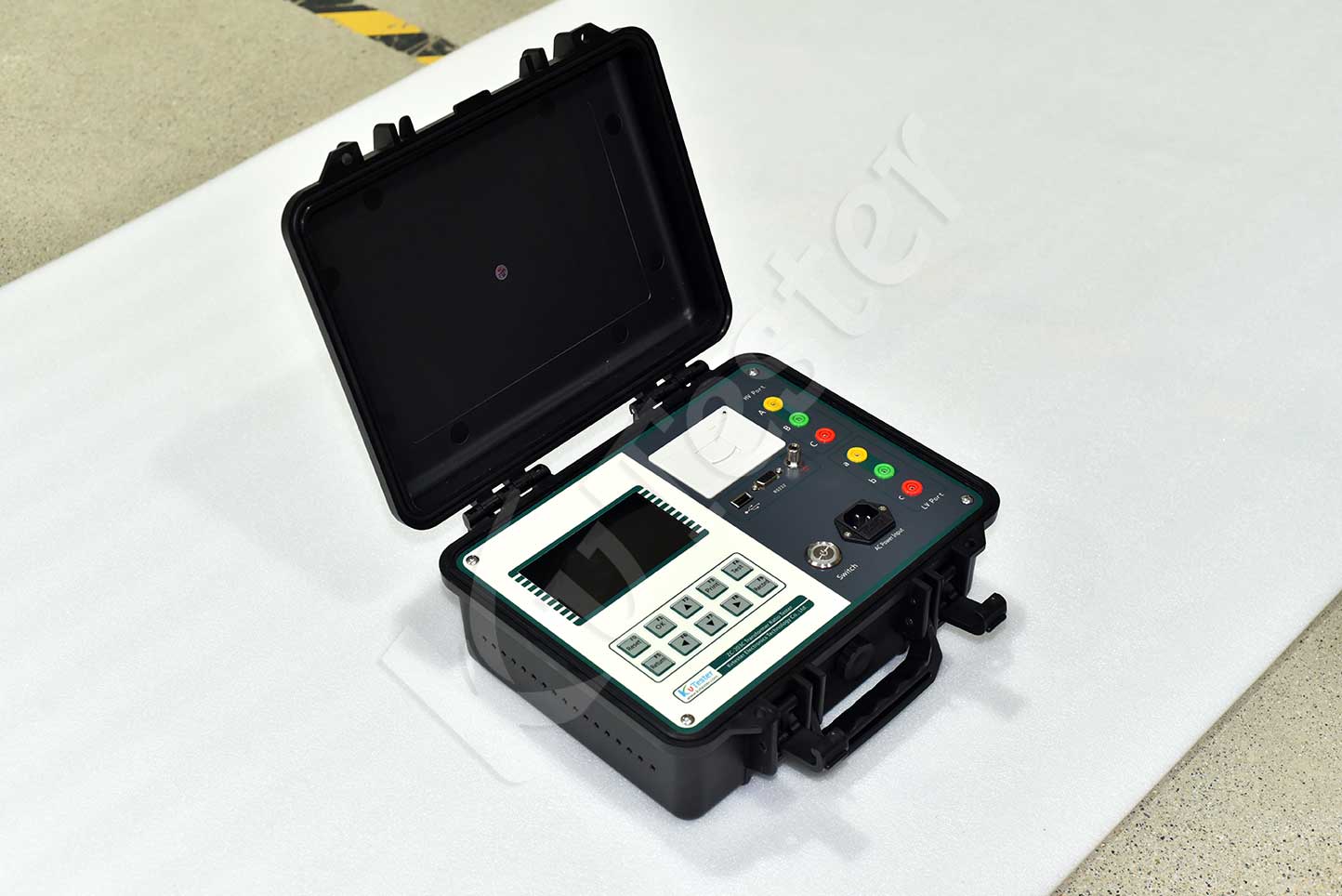
Kvtester Electronics Technology Co.,Ltd. is a high-tech enterprise specializing in power testing, testing, research and development, production, and sales of testing equipment. It has been engaged in the electrical testing industry for many years, and its products are of high quality. We welcome customers to come and purchase. Service hotline: 0086-27-81778799, to learn more, visit the official website: www.kvtester.com