The DC resistance temperature coefficient test is a key test used to evaluate the sensitivity of the DC resistance value of conductors or electronic components to temperature changes. Its core lies in quantifying the linear relationship between resistance and temperature, providing a basis for equipment performance stability analysis. The following is an explanation from four aspects: testing principles, testing methods, application scenarios, and testing significance:
1. Testing principle
The Temperature Coefficient of Resistance (TCR) is a physical quantity that characterizes the change in resistance value with temperature. It is defined as the rate of change in DC resistance value for every 1 ℃ temperature difference between the ambient temperature and the reference temperature (usually 25 ℃). The calculation formula is: α=(R2-R1)/R1 × Δ t
among which
α: Temperature coefficient of resistance (%/℃)
R1: Resistance value at reference temperature t1 (Ω)
R2: Resistance value at test temperature t2 (Ω)
Δ t: Temperature change (℃)
For metal conductors such as copper and aluminum, the resistance usually increases with temperature, and the temperature coefficient is positive; The resistance of semiconductor materials (such as thermistors) may decrease with increasing temperature, with a negative temperature coefficient.
2. Testing method
The temperature coefficient of direct current resistance test usually adopts the following steps:
① Initial resistance measurement: Measure the initial resistance value of the tested component using a high-precision DC resistance tester (such as a four wire bridge method) at a reference temperature (such as 25 ℃)
R1。
② Temperature control and stability: Place the tested component in a temperature control box, gradually adjust the temperature to the target test point (such as -55 ℃, 0 ℃, 70 ℃, 125 ℃, etc.), and maintain sufficient time at each temperature point (such as more than 30 minutes) to ensure that the component temperature is consistent with the temperature inside the box.
③ Resistance measurement: Measure the resistance value R2 of the tested component again at each target temperature point.
④ Temperature coefficient calculation: Calculate the resistance temperature coefficient α according to the formula and record the data.
⑤ Error analysis and stability assessment: Compare multiple measurement data to evaluate the repeatability and long-term stability of the temperature coefficient.
3. Application scenarios
The DC resistance temperature coefficient test has a wide range of applications in various fields, including but not limited to:
① Electrical equipment testing:
Transformer winding detection: By measuring the temperature coefficient of winding resistance, evaluating the performance of winding materials and welding quality, and preventing faults caused by resistance drift due to temperature changes.
Tap changer contact resistance test: Verify the contact reliability of tap changer contacts at different temperatures to ensure normal voltage regulation function.
② Motor and generator testing:
Motor winding health assessment: Measure the temperature coefficient of winding resistance to determine whether there is a turn to turn short circuit or winding deformation, and evaluate the degree of winding aging in combination with insulation testing.
Generator stator winding detection: Verify the DC resistance temperature coefficient of the winding, ensure that the material properties meet the standards, and prevent open circuits caused by poor welding.
③ Cable and weld inspection:
Conductivity testing of wires and cables: Measure the temperature coefficient of conductor resistance, verify compliance with national standards, and detect joint resistance to prevent poor crimping.
Weld interface quality inspection: By measuring the temperature coefficient of weld resistance, the integrity of the weld is verified to ensure the reliability of the conductive connection.
④ Research and Teaching Fields:
Material resistivity research: Study the temperature coefficient of resistance of new materials such as superconducting materials and nanomaterials, and analyze the changes in material properties.
Teaching experimental equipment: used for experimental teaching in electrical engineering and automation majors, to verify Ohm's law and resistance temperature characteristics.
4. Test significance
① Ensure stable equipment performance: By accurately measuring the temperature coefficient of resistance, the resistance changes of the equipment under different temperature environments can be predicted, thereby optimizing design parameters and improving the environmental adaptability of the equipment.
② Preventing potential faults: Abnormal changes in the temperature coefficient of resistance may indicate internal defects in the equipment (such as poor contact, material aging, etc.), which can be detected and addressed in a timely manner through testing to prevent the expansion of faults.
③ Improving product quality: In fields such as electronic components and power equipment, the temperature coefficient of resistance is one of the important indicators for measuring product quality. Through rigorous testing, it can be ensured that the product meets relevant standard requirements and enhances market competitiveness.
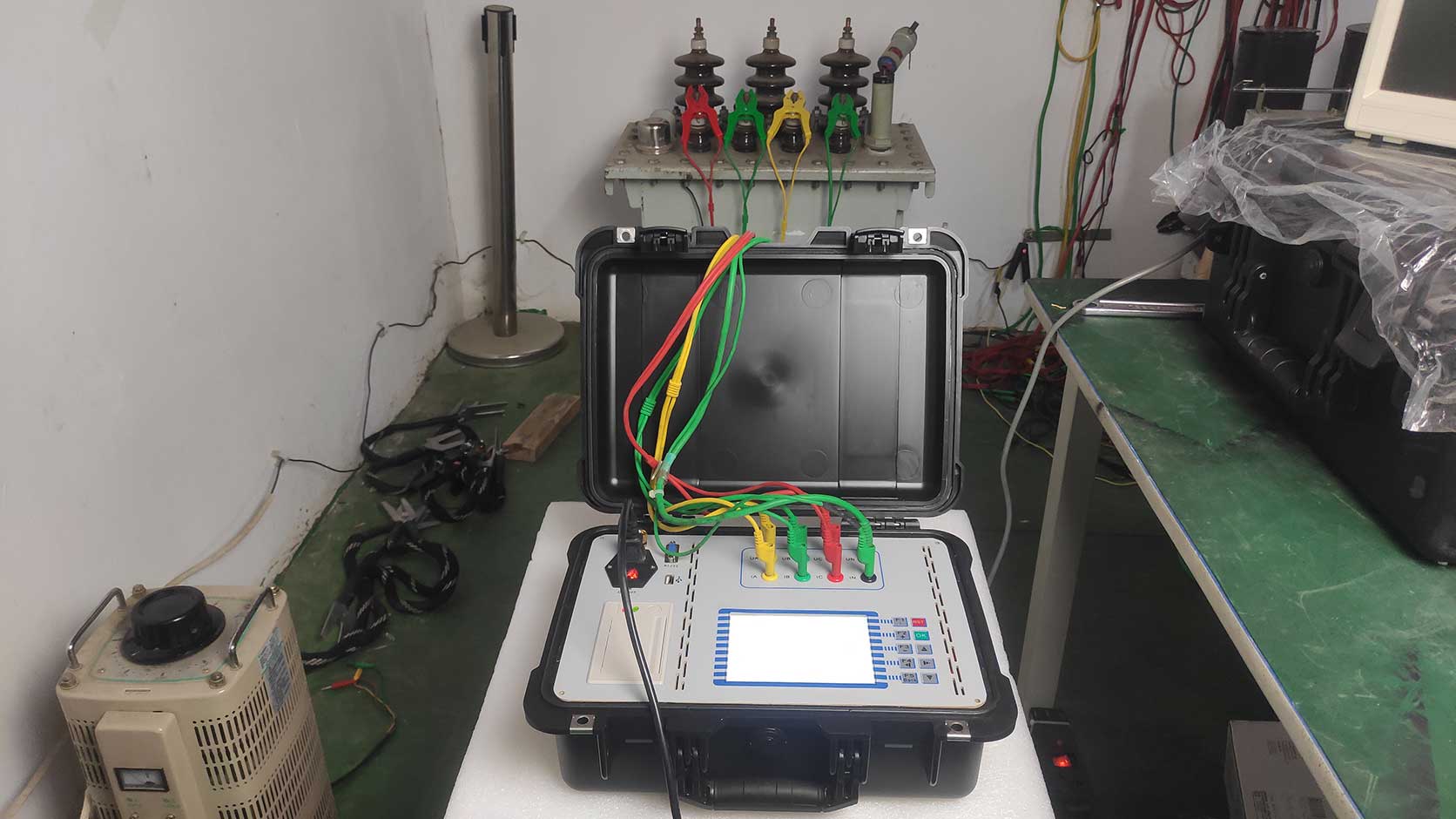
ZC-205E transformer DC resistance fast tester is our company's latest professional transformer DC resistance test equipment, which is mainly used for the DC resistance test of transformers in power systems. The instrument adopts large screen LCD display, full Chinese menu, friendly man-machine interface, complete functions, and convenient operation. It is an ideal instrument for the DC resistance test of transformers in power systems and transformer manufacturers.
Kvtester Electronics Technology Co.,Ltd. is a high-tech enterprise specializing in power testing, testing, research and development, production, and sales of testing equipment. It has been engaged in the electrical testing industry for many years, and its products are of high quality. We welcome customers to come and purchase. Service hotline: 0086-27-81778799, to learn more, visit the official website: www.kvtester.com