The DC resistance tester, as a high-precision measuring device, is widely used in fields such as power, industry, scientific research, transportation, and new energy. Its core application scenarios can be summarized as follows, with specific case studies attached:
1. Electrical equipment testing and maintenance
① Transformer winding detection
Scenario: After the production, installation, major maintenance, and adjustment of tap changers for transformers.
Function: To detect the welding quality of windings (such as virtual welding, broken strands), and avoid heating or short circuits caused by poor contact. Verify the reliability of the tap changer contact and ensure that the voltage regulation function is normal. Check the balance of parallel branch resistance to prevent faults caused by uneven current distribution.
② Transformer performance verification
Scenario: Factory inspection and on-site verification of current transformers (CT) and voltage transformers (PT).
Function: Measure the DC resistance of the primary/secondary winding to verify the accuracy of the transformation ratio. Evaluate the insulation performance of the winding through insulation testing.
③ Low voltage switch contact resistance test
Scenario: Regular inspection of low-voltage equipment such as circuit breakers and isolating switches.
Function: To detect the contact resistance of the contacts and prevent arcing or overheating caused by poor contact. Check the crimping quality of the wiring terminals to ensure reliable conductivity.
2. Motor and generator testing
① Motor winding health assessment
Scenario: Factory inspection of motors, monitoring during operation, and troubleshooting.
Function: Measure the balance of three-phase winding resistance (unbalance rate ≤ 2%), and determine whether there is a turn to turn short circuit or winding deformation. Combined with insulation testing, evaluate the degree of winding aging.
② Generator stator winding detection
Scenario: Inspection after major overhaul of water turbine/steam turbine generator.
Function: To verify the temperature coefficient of the DC resistance of the winding and ensure that the material properties meet the standards. Check the reliability of winding connections to prevent open circuits caused by poor welding.
3. Cable and weld inspection
① Conductivity testing of wires and cables
Scenario: Cable production quality inspection, installation acceptance, and fault location.
Function: Measure conductor resistance and verify compliance with national standards. Check the resistance of the connector to prevent heating or circuit breakage caused by poor crimping.
② Quality inspection of weld joint interface
Scenario: Quality inspection of metal structure welding.
Function: Measure weld resistance and verify welding integrity. Check the contact resistance to ensure the reliability of the conductive connection.
4. Research and Teaching Fields
① Research on material resistivity
Scenario: New material development (such as superconducting materials, nanomaterials) and metal conductivity testing.
Function: Measure material resistivity and calculate it based on sample size and resistance value. Study the temperature coefficient of resistance and analyze the changes in material properties.
② Teaching experimental equipment
Scenario: Experimental teaching of electrical engineering and automation majors.
Function: To verify Ohm's law and measure resistance by changing voltage/current. Simulate circuit faults (such as open circuits and short circuits) to cultivate students' practical skills.
5. Special industry applications
① Rail Transit Contact Network Inspection
Scenario: Regular inspection of high-speed rail and subway contact networks.
Function: Measure contact wire resistance, ensure current transmission efficiency, and reduce energy consumption. Detect joint resistance to prevent arc erosion caused by poor contact.
② New energy equipment testing
Scenario: Testing of equipment such as photovoltaic inverters and wind power converters.
Function: Measure the internal resistance of the power module and verify the conductivity performance of IGBT, diode and other devices. Check the resistance of the busbar connection to ensure the reliability of high current transmission.
6. Other application scenarios
① Inductor and capacitor detection
Scenario: Measurement of DC resistance of inductors.
Function: Evaluate inductor winding losses and optimize design parameters.
② Internal resistance test of battery
Scenario: Health status monitoring of lead-acid batteries and lithium battery packs.
Function: To determine the degree of battery aging and predict the remaining life through changes in internal resistance.
③ Grounding resistance test
Scenario: Detection of lightning protection grounding system.
Function: Measure the resistance of the grounding device to ensure grounding reliability.
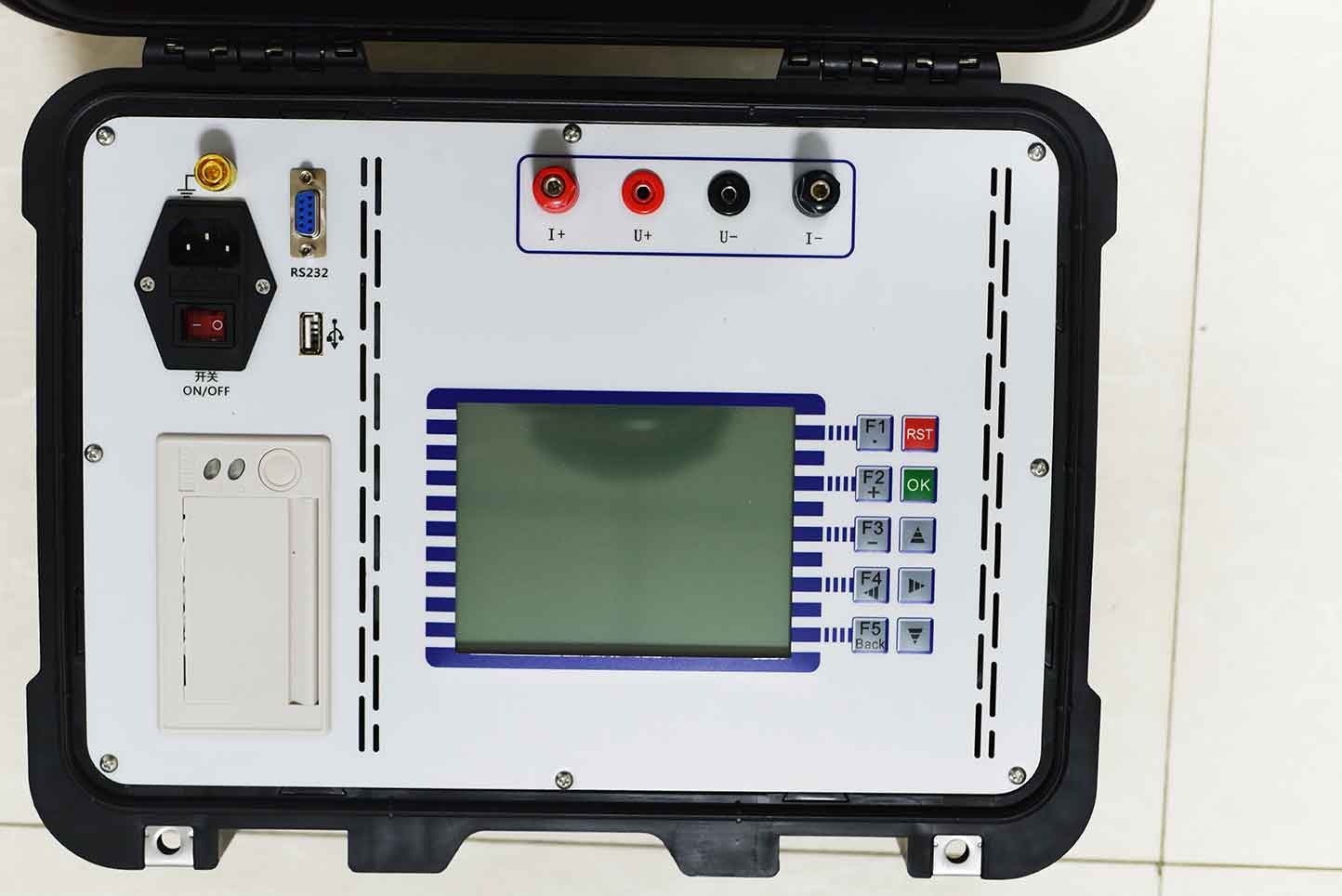
ZC-205A transformer DC resistance fast tester is the latest professional transformer DC resistance test equipment launched by our company. It is mainly used for the DC resistance test of transformer in power system. The instrument adopts large screen LCD display, full English menu, friendly man-machine interface, perfect function and convenient operation. It is an ideal instrument for transformer DC resistance test by power system and transformer manufacturers.
Kvtester Electronics Technology Co.,Ltd. is a high-tech enterprise specializing in power testing, testing, research and development, production, and sales of testing equipment. It has been engaged in the electrical testing industry for many years, and its products are of high quality. We welcome customers to come and purchase. Service hotline: 0086-27-81778799, to learn more, visit the official website: www.kvtester.com